What Emergency Extraction Covers
Centennial addresses sit within a region where changing weather can bring rain, but that does not mean every home has the same exposure. A roof leak is specific to the building and storm. Describe the actual entry point and wet rooms rather than relying on a ZIP code to explain the damage.
When giving directions for a Centennial home, use the street address first. A nearby reference such as Park Meadows Retail Resort, Bison Ridge Recreation Center or Fitzsimons Innovation Community can help only when it genuinely fits the address; none establishes the home's city limits or flood risk.
Calls reach us from throughout Centennial and Arapahoe, but postal names and local jurisdictions can overlap. Before making plans, provide the complete address so the pros we connect you with can confirm whether they can take a call from that location.
Tools Used to Remove Water
- COST FACTORS
- Extraction time depends on the volume of standing water, the affected rooms and how accessible the wet flooring is.
- RAIN ENTRY
- Carpet may look less wet while its pad still holds water, so surface appearance alone does not set the scope.
- WET AREAS
- Pumps or wet vacuums can remove accessible standing water; neither confirms that building materials are dry.
- ACCESS
- Locate the source of the water before planning additional restoration work.
- NEXT STEP
- In Centennial, note the entry point, wet rooms, and whether rain is still coming in when contacting an independent local pro; share photos if safe.
- Water Removal
- Centennial weather shifts can bring rain and, in colder periods, freezing conditions. A roof leak may become visible during a storm or after a thaw, but the season alone does not predict the wet area or extraction time; the rooms and materials affected determine the scope.
- SITE ACCESS
- an estimated $400–$2,000
What Water Extraction Leaves for Later
Roof repair. It stops rain at the building exterior, while water extraction removes accessible standing water indoors. One scope does not automatically include the other, so confirm whether both are being arranged. The service description separates carpet and pad extraction from roof repair. Check the written scope for the rooms and flooring materials included, then see whether roof work is listed separately. That distinction shows whether the estimate covers indoor water removal, stopping the entry, or both.
Safety Before Entering Wet Areas
The pro first maps the visible rainwater intrusion: the ceiling area, rooms below it, wet flooring and any continuing drip. The source must be limited separately from interior extraction. In Centennial, the amount of accessible water and the number of affected rooms help set the work scope and expected time.
Next, accessible standing water is removed, with pumps or wet vacuums suited to the area and material. Carpet and pad may need separate attention because water can remain below the surface. The pro checks affected materials and explains any areas extraction cannot reach; moisture assessment and drying may follow as separate work.
The bill reflects water volume, access, and affected materials. A single visit may be enough when standing water is limited and removal is straightforward. If water has spread or materials remain damp, assessment and drying may require follow-up. Get the scope in writing, including any separate work.
STANDING WATER REMOVAL AND THE DRYING THAT MAY FOLLOW
| Cost Factors |
Typical First Move |
|---|
| Standing water needing urgent extraction | Separate source repair |
| Standing water returns after removal | post-extraction moisture checks |
| Water covering multiple areas beyond one isolated pool | Water removal, drying setup |
Damage NotesAsk whether the extraction scope includes water trapped beneath flooring. Roof repair and reconstruction are distinct scopes, so ask which work is included and who is responsible for it. The facts available here verify no particular state credential or code requirement for extraction.
Moisture Checks And The Next Step
When roof water sits on carpet and pad, the pad can retain moisture after the visible pool is gone. That can widen the affected area and add assessment or drying work after extraction. If rain keeps entering, the cleanup may need to cover newly wet surfaces as well as the original area.
Check for Electrical Hazards
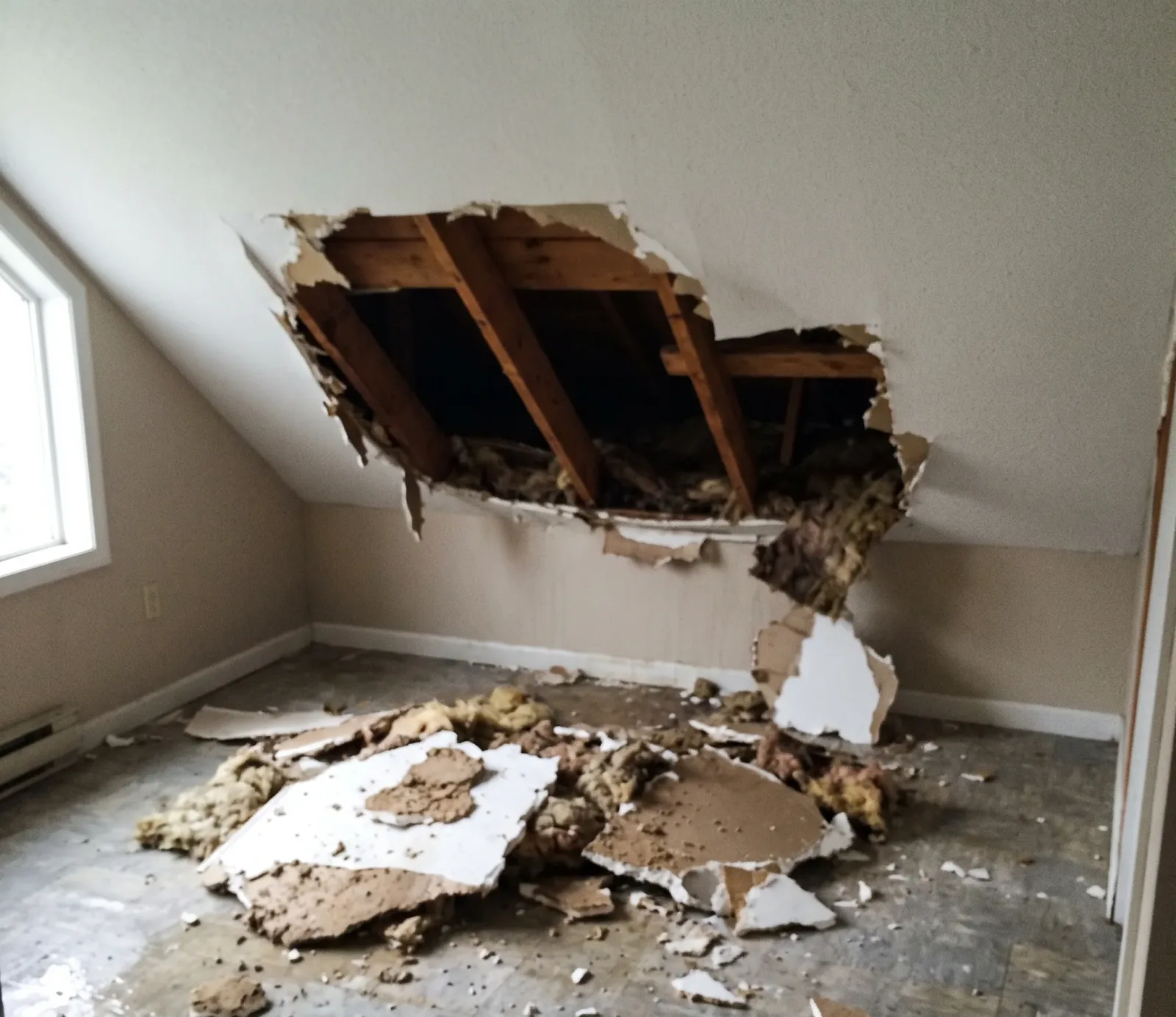
Keep people clear of wet rooms and avoid any area where electrical or ceiling safety is uncertain. If it is safe, place a container under a drip and take photos of the entry area and wet surfaces. Do not climb onto a wet roof or open a ceiling. When calling, describe where rain entered, which rooms are wet and whether water is still coming in.
Moisture Left After Water Removal
A ceiling that bows, sags or begins to shed material needs attention before anyone stands beneath it. Rain can leave ceiling materials weakened, and extraction from the floor will not assess that overhead condition. Keep people out of the area and describe what you see to a qualified pro. In Centennial, include the affected room and whether the ceiling is changing.
See What Standing Water Removal Includes
Your estimate reflects water volume, affected area, site access, and equipment needs. Ask the pros we connect you with to put the removal scope in writing.A musty odor or damp feeling after visible water is gone can signal moisture remains in flooring or walls, even when the puddle itself no longer shows how far it traveled. Any guide here describes extraction; drying, source repair, sewage cleanup, mold work, and rebuilding are separate. Ask for written details to confirm visit charges and the exact scope.For full price ranges, start with pricing guide; for urgent standing-water removal, go to Carpet and Pad Water Extraction.